I have this search column open on twitter with the term “software defined storage”. One thing that kept popping up in the last couple of days was a tweet from various IBM people around how SDS will change flash. Or let me quote the tweet:
“What does software-defined storage mean for the future of #flash?”
It is part of a twitter chat scheduled for today, initiated by IBM. It might be just me misreading the tweets or the IBM folks look at SDS and flash in a completely different way than I do. Yes SDS is a nice buzzword these days. I guess with the billion dollar investment in flash IBM has announced they are going all-in with regards to marketing. If you ask me they should have flipped it and the tweet should have stated: “What does flash mean for the future of Software Defined Storage?” Or to make it even sound more marketing is flash the saviour of Software Defined Storage?
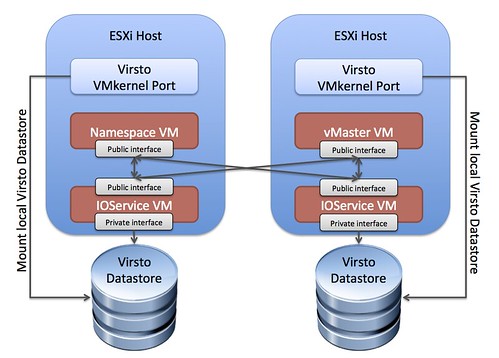
Flash is a disruptive technology, and changing the way we architect our datacenters. Not only did it already allow many storage vendors to introduce additional tiers of storage it also allowed them to add an additional layer of caching in their storage devices. Some vendors even created all flash based storage systems offering thousands of IOps (some will claim millions), performance issues are a thing of the past with those devices. On top of that host local flash is the enabler of scale-out virtual storage appliances. Without flash those type of solutions would not be possible, well at least not with a decent performance.
Since a couple of years host side flash is also becoming more common. Especially since several companies jumped in to the huge gap there was and started offering caching solutions for virtualized infrastructures. These solutions allow companies who cannot move to hybrid or all-flash solutions to increase the performance of their virtual infrastructure without changing their storage platform. Basically what these solutions do is make a distinction between “data at rest” and “data in motion”. Data in motion should reside in cache, if configured properly, and data in rest should reside on your array. These solutions once again will change the way we architect our datacenters. They provide a significant performance increase removing many of the performance constraints linked to traditional storage systems; your storage system can once again focus on what it is good at… storing data / capacity / resiliency.
I think I have answered the questions, but for those who have difficulties reading between the lines, how does flash change the future of software defined storage? Flash is the enabler of many new storage devices and solutions. Be it a virtual storage appliance in a converged stack, an all-flash array, or host-side IO accelerators. Through flash new opportunities arise, new options for virtualizing existing (I/O intensive) workloads. With it many new storage solutions were developed from the ground up. Storage solutions that run on standard x86 hardware, storage solutions with tight integration with the various platforms, solutions which offer things like end-to-end QoS capabilities and a multitude of data services. These solutions can change your datacenter strategy; be a part of your software defined storage strategy to take that next step forward in optimizing your operational efficiency.
Although flash is not a must for a software defined storage strategy, I would say that it is here to stay and that it is a driving force behind many software defined storage solutions!