On twitter a tweet from Frank flew by pointing to an article which was written by one of my VMware colleagues: Matt Bradford aka @VMSpot. I hadn’t seen the article, while it was written in 2014 and I am surprised it never caught more attention. Matt describes in his post how the use and placement of thermal paste can influence VM performance. Who would have thought of that, and I am seriously impressed they managed to get to the bottom of this!
We haven’t had our HP BL460c Gen8’s with the new Xeon E5-2697 v2 12 core processors long. Last week we started to get e-mails from the help desk that users were complaining about sluggish performance in Citrix. Oddly, all of the XenApp VM’s happened to live on the same ESXi host. I say oddly because performance issues rarely seem to fall in line as they did here. We immediately evacuated the host and admitted it to the infirmary cluster.
…..
It didn’t seem to matter if the CPU’s were under load or idle, the temperature would not stray from 69°c. This had to be an issue with the temperature sensors, I thought. So we pulled the host and removed the heat sinks so we could look at the CPU’s through a thermal camera we borrowed from engineering.
I am not going to post the full article here, go over to Matt’s blog and have a read. It is flabbergasting if you ask me, and definitely one of the coolest reads in a long time. And thanks Frank for bringing this one up. I just had to share in on a broader platform.
 That reminds me, maybe it is time to bring back my “favourite reads” post I did for a long time on the VMTN Blog, but host it here instead. Hmmm. Ah well, lets make a start here and follow up with “Recommended reads” posts in the future:
- Compare and Contrast: Photon Controller vs VIC (vSphere Integrated Containers) by Cormac Hogan, explains the difference between these two different products/solutions. It is a great way to learn more about how VMware enables cloud native apps.
- New Home Lab Hardware – Dual Socket Xeon v4 by Frank Denneman. I am starting to wonder who is the craziest in terms of home lab. Maybe we should do a contest, not sure Frank will win as there are some folks who have 3-4 clusters at home like Erik Bussink. Nevertheless, I like how Frank breaks down each component of his new addition.
- Test driving ContainerX on VMware vSphere by William Lam. Always interested in learning more about what it is former VMware engineers are doing. Pradeep Padala is the CTO for ContainerX which William tested out and described in this article.
- VMware HCL in JSON format and VMware HCL check with PowerCLI by Florian Grehl. Very useful if you want to programmatically validate your current environment against the VMware HCL.
That’s it for now, enjoy reading.
 This week I presented at the German VMUG and a day after the event someone commented on my session. Well not really on my session, but more on my title. My title was “Goodbye SAN Huggers“. Mildly provocative indeed. “SAN Huggers” is a play on the term “Server Hugger“. That term has been around for the longest time and refers to people who prefer to be able to point out their servers. People who prefer the physical world, where every application ran on one server and every server was equal to one physical box.
 10. Elvis – If I can Dream (with the Royal Philharmonic Orchestra)
 I was going over some of the posts of the last year which have had a large number of views and/or comments, just to figure out what interests you folks the most. One of the articles that stood out in terms of number of comments definitely was “
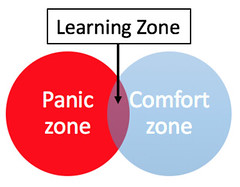 If I have learned one thing, than it is definitely that I learn the most when I am out of my comfort zone. And if you want to set yourself up for success, you will need to make sure you are capable of adapting fast and learn quick. Learning quick typically happens outside of your comfort zone. Now don’t mistake being out of your comfort zone with being in your panic zone. It is okay to be anxious, to be nervous, to have that jittery feeling… but be aware that this does not turn in to anxiety. Most of you have been in that place at some point in time, you need to do something far far out of your comfort zone, for me that was designing and configuring a network environment (including routing) when I had been responsible for Windows/X86 servers for a couple of years. Way out of my depth for sure back then, which resulted in anxiety and ultimately a failed project. Which leads me to the next skill that will help you grow: Knowing what you know.