If you changed the advanced setting VSAN.ClomRepairDelay to anything else than the default 60 minutes there’s a caveat during the upgrade to 6.7 U1 you need to be aware of. When you do this upgrade the default is reset, meaning the value is configured once again to 60 minutes. It was reported on twitter by “Justin Bias” this week, and I tested in the lab and indeed experience the same behavior. I set my value to 90 and after an upgrade from 6.7 to 6.7 U1 the below was the result.
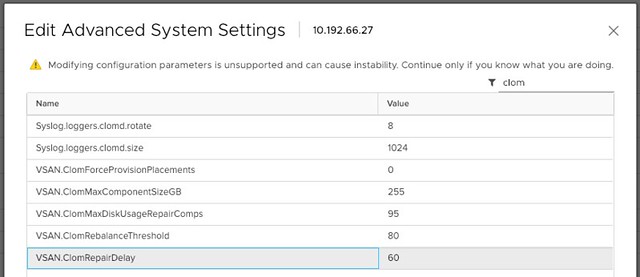
Why did this happen? Well, in vSAN 6.7 U1 we introduced a new global cluster-wide setting. On a cluster level under “Configure >> vSAN >> Services” you now have the option to set the “Object Repair Time” for the full cluster, instead of doing this on a host by host basis. Hopefully this will make your life a bit easier.
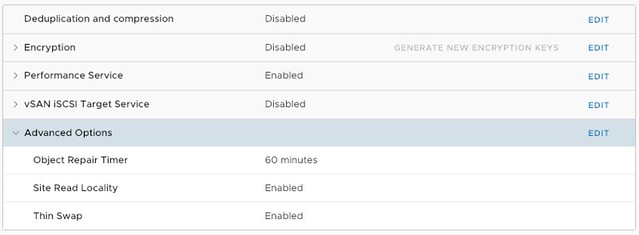
Note that when you make the change globally it appears that the Advanced Settings UI is not updated automatically. The change is however committed to the host, this is just a UI bug at the moment and will be fixed in a future release.

 Another amazing story was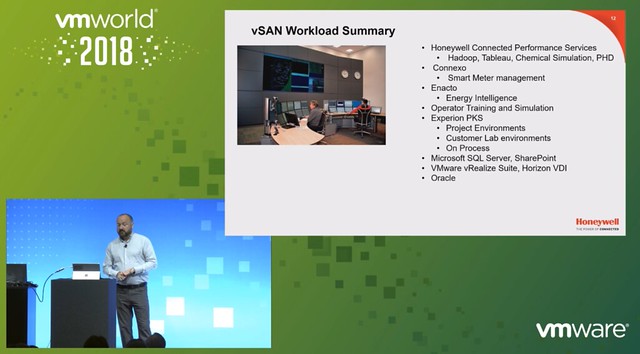

 Norwegian Cruise Line mentioned that they also still use traditional storage, same for ConAgra. It is great that you can do this with vSAN, keep your “old investment”, while building out the new solution. Over time most applications will move over though. One thing that they feel is missing with hyper-converged is the ability to run large memory configurations or large storage capacity configurations. (Duncan: Not sure I entirely agree, limits are very close to non-HCI servers, but I can see what they are referring to.) One thing to note as well from an operational aspect is that certain types of failures are completely different, and handled completely different in an HCI world, that is definitely something to get familiar with. Another thing mentioned was the opportunity of HCI in the Edge, nice small form factor should be possible and should allow running 10-15 VMs. It removes the need for “converged infra” in those locations or traditional storage in general in those environments. Especially now that compute/processing and storage requirements go up at the edge due to IoT and data analytics that happens “locally”.