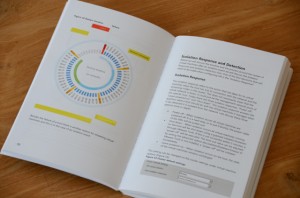
For those who are not following Frank’s blog, he just posted a sneak peek of the upcoming vSphere Clustering book. It looks really really slick in full color. I promise you won’t be disappointed. Go to Frank’s article for more details.
by Duncan Epping
For those who are not following Frank’s blog, he just posted a sneak peek of the upcoming vSphere Clustering book. It looks really really slick in full color. I promise you won’t be disappointed. Go to Frank’s article for more details.
I had this question coincidentally two times of the last 3 weeks and I figured that it couldn’t hurt explaining it here as well. The question on the VMTN community was as follows:
on 13 sec: a host which hears from none of the partners will ping the isolation address
on 14 sec: if no reply from isolation address it will trigger the isolation response
on 15 sec: the host will be declared dead from the remaining hosts, this will be confirmed by pinging the missing host
on 16 sec: restarts of the VMs will beginMy first question is: Do all these timings come from the das.failuredetectiontime? That is, if das.failuredetectiontime is set to e.g. 30000 (30 sec) then on the 28th second a potential isolated host will try to ping the isolation address and do the Isolation Response action at 29 second?
Or is the Isolation Response timings hardcoded and always happens at 13 sec?
My second question, if the answer is Yes on above, why is the recommendation to increase das.failuredetectiontime to 20000 if having multiple Isolation Response addresses? If the above is correct then this would make to potential isolated host to test its isolation addresses at 18th second and the restart of the VMs will begin at 21 second, but what would be the gain from this really?
To which my answer was very short fortunately:
Yes, the relationship between these timings is das.failuredetectiontime.
Increasing the das.failuredetectiontime is usually recommended when an additional das.isolationaddress is specified. the reason for this is that the “ping” and the “result of the ping” needs time and by added 5 seconds to the failure detection time you allow for this test to complete correctly. After which the isolation response could be triggered.
After having a discussion on VMTN about this and giving it some thought and bouncing my thoughts with the engineers I came to the conclusion that the recommendation to increase das.failuredetectiontime with 5 seconds when multiple isolation addresses are specified is incorrect. The sequence is always as follows regardless of the value of das.failuredetectiontime:
The timeline in this article explains the process well.
Now, this recommendation to increase das.failuredetectiontime was probably made in times where many customers were experiencing network issues. Increasing the time decreases the chances of running in to an issue where VMs are powered down due to a network outage. Sorry about all the confusion and unclear recommendations.
As part of my new role within VMware Technical Marketing I am responsible for creating collateral. Most of you have seen the series of articles about the operational differences between ESX and ESXi. After finalizing the series I transformed them into a whitepaper. I guess one thing that stood out for me while going through that process is that writing a whitepaper is substantially different than writing a blog article and even a book. I am not sure how to explain it, but a whitepaper feels less personal and more official and requires a different writing style. On top of that there are of course multiple reviews, style edits and much more. But anyway, that is not the point of this article… I just wanted to let you know that it is out there, and I hope you will enjoy reading it.
VMware ESXi Operations Guide
Learn how to perform common datacenter tasks in your ESXi environment by seeing the operational differences from the legacy ESX architecture.
Another whitepaper I wanted to point out is the ESXi Migrations Guide. It has been written by my colleague Kyle Gleed and is an excellent start for those looking to migrate from ESX to ESXi in the near future. Not only is the whitepaper very useful, but I am also confident you will appreciate the checklists and the configuration sheet which will help with a smooth transition.
VMware ESXi Migration Guide
Learn how to plan and perform your migration to the ESXi architecture from the legacy ESX framework, with helpful checklists for organizing the steps involved.
We are also working on automating some parts of the upgrade, and I hope to be able to publish an update on that soon.
A couple of weeks ago Alan Renouf contacted me and asked me if it was okay to turn some of our best practices mentioned in the book into PowerCLI code. I thought about it for 0.00001 seconds and yelled: hell yeah! Alan worked on it for a couple of days over the last couple of weeks and this is the result. Alan hasn’t been able to get the full book into his audit script, but knowing Alan he will get their in a couple of weeks (no pressure). Not only does the outcome of the audit script look really cool, it is also very useful. I will be working with Alan on refining and enhancing it over the next couple of weeks so check Alan’s website on a regular basis for updates. Once again, Alan great work…

This is one of those days that you realize how quickly things can change… 3.5 years ago I worked for a small consultancy company in the south of the Netherlands. Today I work for the number 1 virtualization/cloud company in the world, VMware, and just published my 4th book with a 5th coming later this year. What a ride, what a change, a lot of work and yes it was more than worth it.
I was part of a team of 6 guys who worked on this new book that was just published in the Short Topics series by Sage/Usenix. I guess you could say it is a follow up of “Foundation for Cloud Computing with VMware vSphere 4”. This book deals with VMware vCloud Director and touches each of the components of vCloud Director. Although it is a short topic series with only 136 pages there is in-depth information to be found on the various aspects of vCloud environments. I guess for me personally the most exciting part is the fact that no one less than VMware CEO Paul Maritz wrote the foreword! That is a great honor!
I want to especially thank Ben Lin and John Arrasjid for bringing this together. I know they’ve spend countless of hours in the evening editing the book. Of course I also want to thank my fellow co-authors: Michael Haines, Steve Kaplan and Raman Veeramraju. It was a pleasure working with you guys. I also want to thank Usenix/Sage for this opportunity. I want to point out that none of the authors receives or has received royalties. (Except for complementary copies of the book which we will give away for free at various events!) Usenix / Sage is a great organization which organizes many great events to which hopefully the revenue of this book will contribute.

Book #24, Cloud Computing with VMware vCloud Director, by John Arrasjid, Duncan Epping, Steve Kaplan Ben Lin, Michael Haines and Raman Veeramraju. This Short Topics book provides use cases, design considerations, and technology guidance to answer your questions about cloud computing. The primary intended audience is those interested in learning about VMware cloud computing products and solutions, but content on third-party technologies is also included where appropriate. Without diving overly deeply into specific design patterns, it provides insight into the tools to fit your design criteria and it explains the concepts used by vCloud ranging from Organization Virtual Datacenters to External Networks. The book includes a 17″x38″ poster with a deepdive on vCloud Director networking.
Buy it here on Amazon (Paper | ebook coming soon)